Gelatin: The Polymer We All Know
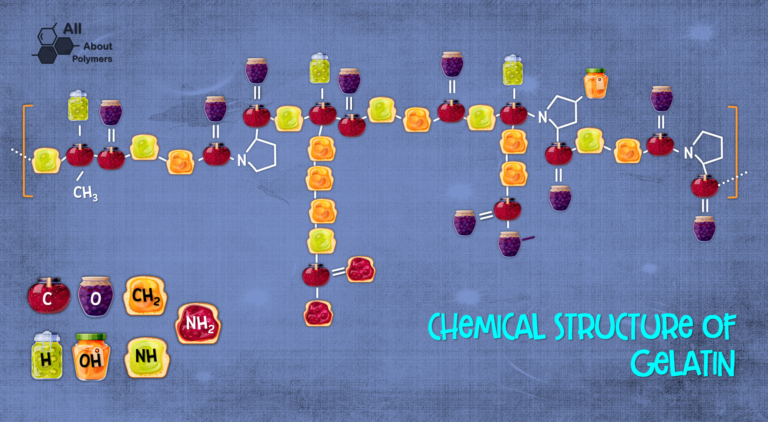
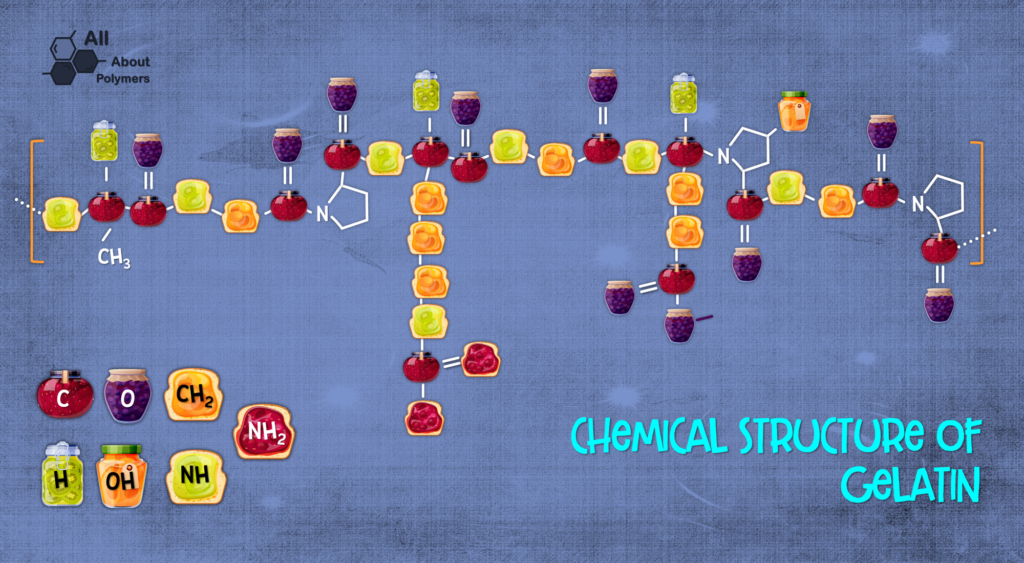
Gelatin (from the Latin gelatus, meaning “stiff” or “frozen”) is a natural polymer obtained from the collagen in animal tissues through a process called hydrolysis. Its structure is built mainly from amino acids such as glycine, proline, and hydroxyproline.
In simple terms: gelatin is collagen that has been transformed irreversibly. During hydrolysis, the long protein chains break into smaller fragments called peptides, and depending on the method used, these peptides can be of different sizes.
You’ve almost certainly met it as the jiggle in a bowl of Jell-O (or “jelly,” as it’s known in the UK), the chew in gummy bears, and the fluff in marshmallows. But it reaches well beyond the candy aisle: it forms the shells of medicine capsules and the now-popular gummy vitamins, and it shows up in cosmetics too.
Gelatin is almost tasteless and odorless, with a transparent or slightly yellowish appearance, and it comes in sheets, flakes, or powder. It dissolves in hot water and in some polyalcohols such as glycerin, but not in organic solvents like ethanol. One of its most curious properties is that it can absorb between 5 and 10 times its weight in water, forming a gel that melts when heated and turns less viscous under shear stress, recovering its consistency once at rest — a behavior known as shear-thinning, or thixotropy.
Its melting point depends on the source, but it usually falls between 32 and 35 °C (about 90–95 °F) — just below human body temperature, which is exactly why gelatin “melts in your mouth.” The viscosity of a gelatin–water mixture, meanwhile, climbs higher when the concentration is high and the mixture is kept cold, around 4 °C (39 °F).
To learn about polymers, chemistry, and more, visit us at: [www.allaboutpolymers.com]
Our Books: https://allaboutpolymers.com/our-books/
#Polymers #ChemicalEngineering #Food Polymers #MaterialsScience #AllAboutPolymers