Behind Every Great Plastic…
…there’s a supporting cast you never see. The polymer gets its name on the label, but fillers and additives are what quietly decide how it costs, processes, and performs. In our beaded-necklace picture, the strand of repeating beads is the polymer itself — yet almost everything you actually buy has other materials mixed in around and between the strands to tune it for the job. Choosing them well is most of what turns a lab resin into a real product.
Polymers can be modified easily with the right fillers and additives, depending on what the job demands of both the process and the final part. The list of available materials is effectively endless; what follows are the ones you’ll meet most often.
Fillers
A filler is a material added to a polymer formulation to lower the cost of the compound or to improve its properties. Fillers can be solid, liquid, or gas. With the right selection — judged not only on price but on processing behavior and mechanical performance — a filler can genuinely improve the compound rather than merely cheapen it.
A filler keeps its own inherent characteristics, yet very different results often show up depending on the polymer’s molecular weight, the compounding technique used to make the blend, and the other additives already in the formulation. So, once you’ve set the basic property targets, those targets decide which filler is optimal and where its best balance of cost and performance lands.
Adding filler also calls for a balanced formulation to keep processing properties where you want them. Before committing to a filled compound, it’s worth pinning down three things:
1. The optimal filler loading, judged against the properties and benefits you need
2. The optimal formulation for processing
3. The economics of the filled formulation
How fillers are classified
Fillers have been sorted in many ways, from shape to specific characteristics. Broadly, two axes are most useful: classification by performance and classification by type.
By performance: extending vs. functional
Extending fillers mainly occupy space. Their job is to bring down formulation cost. An ideal extending filler should:
- Be spherical, so the compound’s properties stay isotropic (the same in every direction)
- Have a particle-size distribution suited to good packing
- Be chemically unreactive toward the polymer and the other additives
- Have low specific gravity
- Have a desirable refractive index and color
- Be low in cost
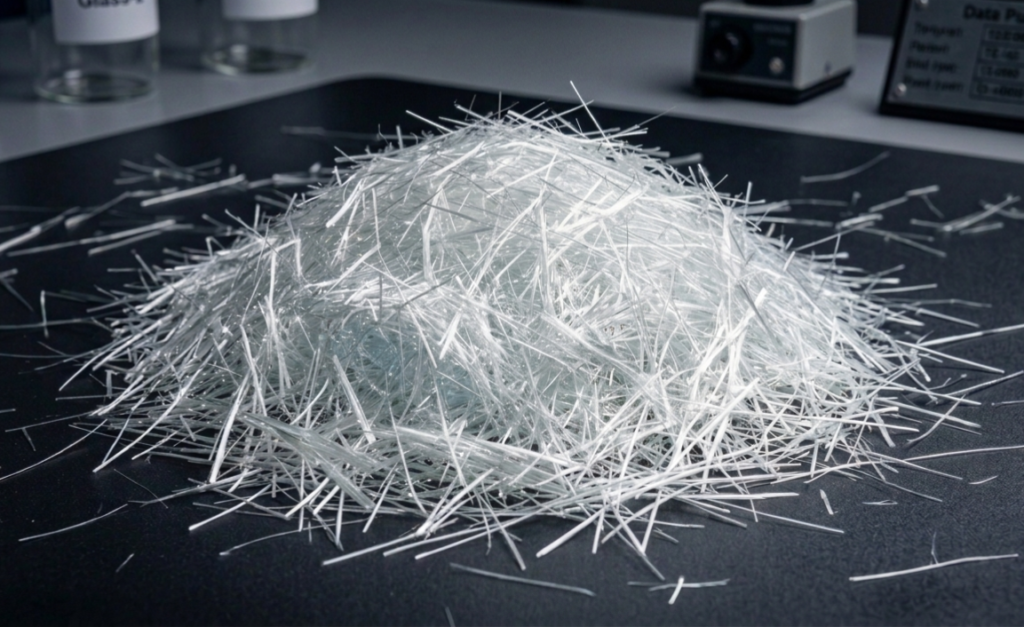
Functional fillers have a defined job beyond cutting cost. The line isn’t sharp: some extending fillers, when used at a finer particle size and/or with a surface treatment, behave as functional fillers — and a filler that’s functional in one polymer can be a plain extending filler in another. That makes them awkward to classify by composition, but at the functional level you can tell them apart by what they do to the finished polymer’s performance, given the loading and how much they raise the property in question.
So, extending fillers mostly reduce cost and raise the flexural modulus, while functional fillers deliver at least one specifically required function. Fillers are also used to modify or improve properties such as thermal conductivity, electrical resistivity, friction, wear resistance, and flame resistance, among others. Classic functional examples are glass fiber and mica, which increase stiffness and improve thermal and dielectric performance.
By type: particulate vs. elastic
Particulate fillers split into two groups: inert fillers and reinforcing fillers. “Inert” isn’t really the best word, since several properties do change when you add one. For normal use, these fillers should be completely insoluble in any liquid the compound might contact. Each type can vary in:
- Average particle size and size distribution
- Particle shape and porosity
- The chemical nature of the surface
- Impurities such as grit and metal ions
As a rule, the finer the particle, the higher the tensile strength, modulus, and hardness. Coarser particles tend to give a compound with lower properties than the unfilled (virgin) material; finer particles improve the mechanical properties instead — and that improvement is what we call reinforcement.
Impurities can hurt a polymer compound badly. Coarse particles create weak points in flexible polymers, which can then fail below their expected limits. In general, reinforcement seems to depend on three factors:
• Extensity — the total filler surface area per unit volume in contact with the polymer
• Intensity — the specific activity of the filler–polymer interface, creating physical and/or chemical bonding
• Geometry — things like particle structure and porosity
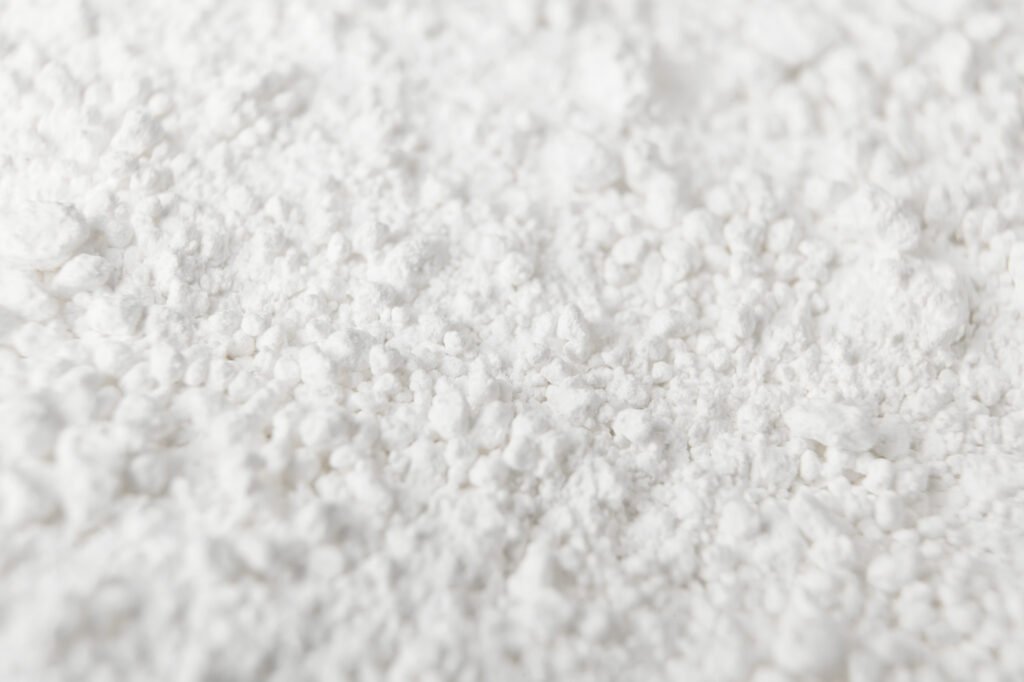
Examples of particulate fillers include calcium carbonate, glass microspheres, and titanium dioxide.
Elastic fillers can come from recycled thermoset (cross-linked) rubbers and are often blended into rigid thermoplastics to improve toughness — impact and fracture resistance — though they lower stiffness and, depending on the filler, thermal resistance.
Filled and reinforced compounds are used to change or improve the physical properties of plastics, mainly the mechanical ones, though in some cases — glass fiber being the obvious one — they also lift thermal and dielectric performance. Fillers and reinforcements can cut material cost too, by replacing part of the polymer. But keep one thing in mind: fillers are usually denser than the polymer, and cost is reckoned per gram of finished material — so a filled compound doesn’t save money in direct proportion to the volume of polymer you’ve displaced.
Additives
Additives for plastics are typically organic molecules added to polymers in small amounts — usually 0.05 to 5.0% by weight — during manufacture, melt processing, or conversion, in order to improve the polymer’s inherent properties. They fall into three main categories: polymer modifiers, performance enhancers, and process aids.
By a wide margin, polyvinyl chloride (PVC) is the polymer that offers additives their largest market: plasticizers and property modifiers together account for roughly 75% of global plastic additives. After PVC, polyolefins and styrenics are the next-biggest additive users.
• Polymer modifiers mainly alter the plastic’s physical or mechanical properties. They include plasticizers, foaming (blowing) agents, filler coupling agents, compatibilizers, impact modifiers, organic peroxides, nucleating agents, clarifiers, and more.
• Performance enhancers add a functionality the polymer doesn’t have on its own. These include flame retardants (FR), heat stabilizers for PVC, antioxidants, light stabilizers, biocides, and antistatic agents. A newer family includes conductive carbon black, carbon nanotubes, graphenes, and conductive organic polymers — used to give plastics and coatings antistatic/EMI shielding or outright conductivity.
• Process aids are typically surfactants added during conversion to improve throughput and modify the surface properties of the final article. This class includes lubricants, slip agents, anti-block agents, and mold-release agents.
“The polymer gets its name on the label, but fillers and additives are what quietly decide how it costs, processes and performs.”
Getting additives into the polymer
Additives are worked into the polymer matrix in several ways and at different points in the process. Polymer producers add them as individual components, or as blends of two or more, during the pelletizing stage. Converters more often add them as a concentrate (master batch, MB) or as a liquid dispersion. A master batch is an additive carried in a polymer-resin vehicle at high concentration (10–40%). In a liquid dispersion, the additives and/or colorants are dispersed or suspended in a reactive or inert liquid vehicle — mineral oil, aliphatic glycols, or alkylene esters — along with other dispersants; these liquid systems are injected straight into the conversion equipment through a peristaltic metering pump.
Meet the Supporting Cast: The Additives
Plasticizers
Mainly a modifier — and often a process aid too.
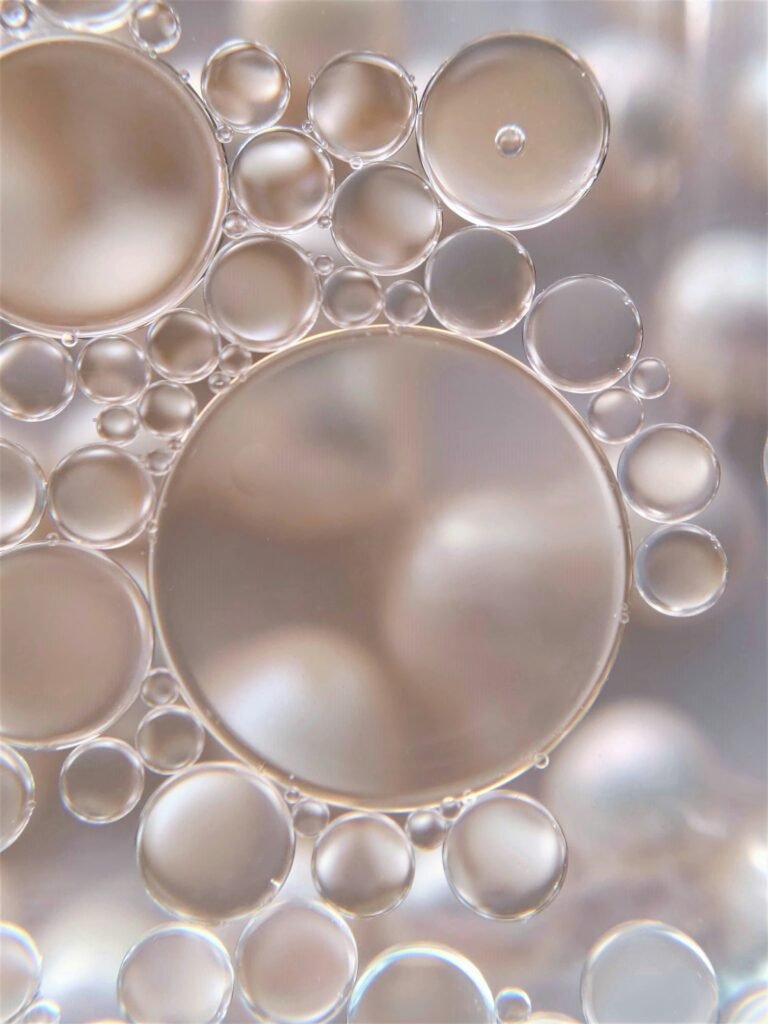
Plasticizers are added at high loadings — up to 80%, depending on how flexible the part needs to be. Going back to the necklace: a plasticizer works like a lubricant slipped between the strands, letting them slide past one another so the material bends instead of resisting. Added to inherently hard thermoplastics, they raise flexibility, softness, and elongation, and they often bring secondary benefits like better processability, higher impact resistance, and greater ductility.
Plasticizers are also used as pigment carriers and as the liquid vehicle for plastisols. Chemically they’re predominantly esters, made by reacting an acid or anhydride with a linear or branched alcohol. Performance properties — low-temperature flexibility, volatility, processability, and extractability — are governed by the alcohol’s chain length and degree of branching.
Common liquid plasticizers include diisononyl phthalate (DINP), diisodecyl phthalate (DIDP), and dioctyl phthalate (DOP), plus epoxidized soybean oil (ESBO). ESBO does double duty: it also acts as a secondary heat stabilizer in PVC, scavenging the hydrochloric acid generated during processing, and as a plasticizer it shows excellent extraction resistance and low migration.
Foaming Agents
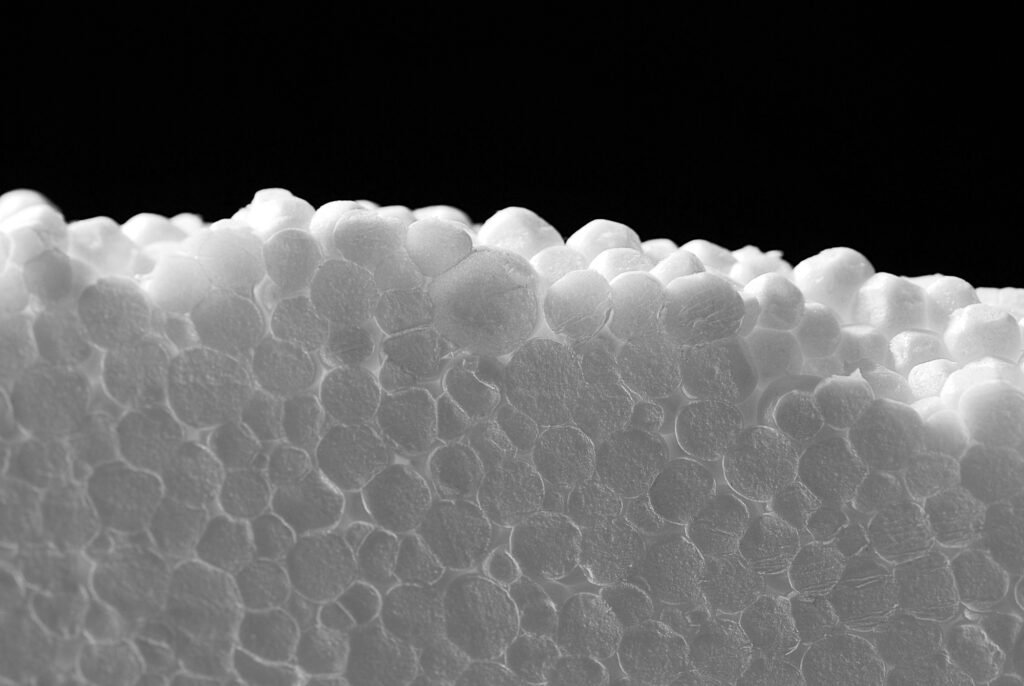
A modifier — and the foam structure enhances performance.
Foaming (blowing) agents are inorganic or organic additives that produce a foamed structure. They’re widely used in PVC, polyethylene (PE), polypropylene (PP), and polystyrene (PS) to improve both properties and appearance — heat and sound insulation, better stiffness, the elimination of sink marks in injection-molded parts, improved electrical properties — and to reduce part weight. They split into physical and chemical types, and are usually added through a concentrate or master batch.
Physical blowing agents are volatile liquids or compressed gases that dissolve in the polymer and change state during processing to form a cellular structure.
Chemical blowing agents (CBAs) decompose thermally during processing, releasing the gases that form the foamed product. Organic CBAs are typically solid hydrazine derivatives that generate nitrogen through an exothermic reaction; the most common is azodicarbonamide. Others include sulfonyl hydrazides, used for low-temperature applications, and p-toluenesulfonyl semicarbazide, used at high temperatures in materials such as ABS, polyphenylene oxide (PPO), polyamides, and high-impact polystyrene (HIPS).
The high gas yields and pressures of exothermic CBAs make them useful in applications like cross-linked PE and extruded products. Endothermic CBAs are based on mixtures of inorganic carbonates and polycarbonic acids, both giving off carbon dioxide; the right combination opens an operating window of about 150–300 °C. A common commercial system pairs citric acid with sodium bicarbonate. Endothermic CBAs generally release less gas, giving foams with a finer cell structure than the exothermic ones.
Coupling & Compatibilizing Agents
A modifier — it bonds filler to polymer, or one clashing resin to another.
The chemistry in this section runs deep — if you just want the idea, coupling agents are molecular “double-sided tape” that bonds an inorganic filler to an organic polymer. The detail below is for readers who want the mechanism.
Coupling agents promote adhesion between polymers and inorganic fillers by forming stable chemical bonds between the organic matrix and the filler surface. Their biggest single use is treating glass fibers for thermoset systems such as epoxy and polyester resins. Other fillers they work with include clay, silica, mica, wollastonite, calcium carbonate, and alumina trihydrate (ATH).
The most common coupling agents are organosilanes, with the general structure RSi(OR′)₃. Here R is a functionalized organic group that bonds to the polymer matrix (amino, epoxy, acrylate, or vinyl), and R′ is typically methyl or ethyl. The methoxy or ethoxy groups hydrolyze to silanols, which react with the hydroxyl groups on the inorganic filler surface to form oxane bonds — and the payoff is improved mechanical or electrical properties. Aminosilanes are normally used for epoxy and phenolic resins, epoxy-silanes for epoxy resins, and methacrylate silanes for unsaturated polyesters. Fillers are usually pre-treated with an aqueous silane dispersion, then reacted with the polymer matrix during compounding. The silane improves wetting during extrusion, lowering the surface tension at the organic–inorganic interface for better dispersion.
A special class of coupling agents is the maleated polyolefins. The pendant maleic-anhydride unit reacts with surface hydroxyl groups (or with the siloxane group on a pre-treated filler), while the polymer portion co-crystallizes with the matrix. Their main applications are glass-fiber PP compounds and non-halogenated flame-retardant wire and cable. Adding just 1–2% maleated PP can raise the tensile strength of a glass-fiber-filled PP by as much as 40%. Maleic-anhydride attack isn’t exclusive to polyolefins — ethylene copolymers, TPOs, and others can be modified the same way, which opens a very wide range of compatibilization. Some resin pairs that don’t mix on their own: PA with PP, PA with PE, PET with PE, PET with PP, and so on.
“Polymers can be modified easily with the right fillers and additives, depending on what the job demands of both the process and the final part.”
Impact Modifiers
Both a modifier and a performance enhancer.
Impact modifiers work by absorbing impact energy and dissipating it non-destructively. They’re typically elastomeric and are added to a wide range of thermoplastics at loadings up to 20%. The main types are acrylics and styrenics — including methacrylate-butadiene-styrene (MBS) and acrylonitrile-butadiene-styrene (ABS) copolymers — chlorinated polyethylene (CPE), ethylene-vinyl acetate (EVA) copolymers, ethylene-acrylate copolymers (EMA, EBA), and ethylene-propylene copolymers and terpolymers. The biggest markets are PVC, PE, and PP, though they’re used across many other engineering and recycled polymers.
EPDM (ethylene-propylene-diene monomer rubber) and EPR (ethylene-propylene rubber) are used to modify polyolefins, mainly in the automotive industry — although these rubbers are increasingly being replaced by impact-resistant polymers such as metallocenes and ethylene copolymers, which offer better performance and cost.
Nucleating & Clarifying Agents
A modifier that speeds processing — and, as a clarifier, enhances clarity.
Materials added to semi-crystalline plastics before processing, to influence the crystallization rate and the size of the spherulites, are called nucleating agents. They’re typically insoluble or immiscible materials that provide sites for crystals to form on. Their main benefit is a shorter cycle time in injection molding.
When a nucleating agent shrinks the crystallites below the wavelength of visible light, it’s called a clarifying agent — because at that point the crystallites are too small to scatter light, so opacity drops and transparency improves. (This is the same physics behind why amorphous polymers are clear, which we covered on the Types of Polymers page: light scattering at crystallite boundaries is what makes a semi-crystalline plastic hazy in the first place.)
For nucleating nylon and PP, the traditional choice is sodium benzoate, used at around 0.1%; it gives no optical improvement. Low-molecular-weight polyolefins, ionomers, and plasticizers such as ESBO are used to nucleate semi-crystalline plastics like PET. Modified benzylidene sorbitols dominate the PP nucleation-and-clarification market, used at 0.1–0.3% in both homopolymers and copolymers for injection molding. Talc and other minerals are also commonly used as nucleating agents.
Organic Peroxides
A modifier — it cross-links or trims chains (and, upstream, kicks off polymerization).
Organic peroxides are used in the plastics industry either to catalyze polymerization reactions or to modify the properties of existing polymers. On the polymerization side, peroxides serve as initiators for PVC, low-density polyethylene (LDPE), polystyrene (PS), and acrylics.
As modifiers of existing polymers, peroxides cure unsaturated polyester resins; act as cross-linking agents for PE, EVA, and a range of ethylene-based polymers and elastomers; and reduce the molecular weight of polypropylene in a process known as controlled rheology, or visbreaking. (That cross-linking role is exactly what turns thermoplastics like PE and EVA into thermosets — the cable jackets and footwear soles we mentioned on the Types of Polymers page.)