
Once upon a time, people had been shaping and using an extraordinary kind of material for ages — bending it, spinning it, molding it to their needs — long before anyone could say what it actually was. The answer was hiding in plain sight: in something far too small to see, yet far too long to imagine. This is the story of how, decade by decade, we finally uncovered the hidden architecture of the everyday world.
The Origin of the Term “Polymer”
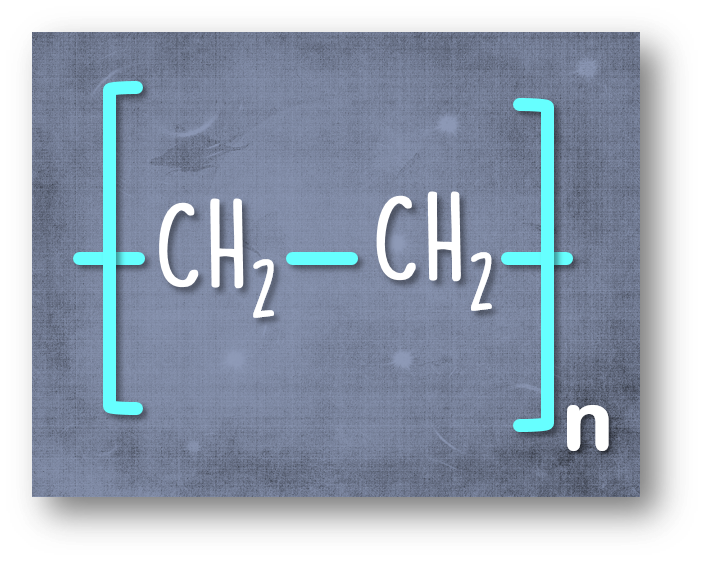
In 1826, Faraday reported the fractionation of a liquid that separated out from an illuminating gas under pressure. The most volatile component was a gas with the same elemental composition as ethylene but twice its density. This was puzzling, because at the time a compound was thought to be defined by its elemental composition alone.
In the early literature, the term was used without regard to chemical structure; styrene (C₈H₈), for example, was described as a polymer of acetylene (C₂H₂). Later it was often used ambiguously, with no distinction drawn between loose molecular aggregates and true covalent compounds. Because the products of polycondensation differ in elemental composition from their starting monomers, Staudinger objected to calling them polymers at all. Today’s usage follows Carothers’s definition: a polymer has a structure that can be represented by –R–R–R–R–R–, where R is a radical that is generally incapable of independent existence. In modern terms, molecular aggregates formed from several macromolecules through non-covalent interactions are called supramolecular polymers.
The 19th Century
Hevea rubber had seen limited use for some time, but it did not become a major raw material until after Goodyear’s discovery of vulcanization in 1839, followed by the development of rubber mastication and vulcanization in steel molds. The growth of the automobile industry drove an enormous rise in demand for rubber — and, with it, the brutal methods used in the Belgian Congo and South America to force native peoples to harvest ever more latex from Hevea trees. At the same time, the search for a synthetic substitute became a powerful incentive for research.
The first plastic traces its origins to a contest held in 1860, when the American billiard-ball manufacturer Phelan & Collender offered a $10,000 reward to anyone who could develop a substitute for natural ivory in the making of billiard balls.
In 1862, Alexander Parkes created “Parkesine,” a product derived from cellulose.
That same year, silk was found to be soluble in an ammoniacal copper solution and to solidify after being extruded through spinnerets. Nitrocellulose fibers were patented in 1883 and applied to textiles by de Chardonnet. His patents describe coagulating nitrocellulose solutions after extrusion through spinnerets, and removing the nitro groups to reduce flammability; this process was later displaced by the viscose process, which requires neither the removal of the nitro groups nor ether as a solvent.

But it was not until 1868 that the American inventor John Wesley Hyatt won the contest, with the invention of celluloid — a material made from cellulose, the basic structural component of plant cell walls. This moment marked the beginning of the polymer industry. Hyatt treated cellulose nitrate, or guncotton (an explosive obtained by exposing cotton-plant fibers to nitric and sulfuric acids), with alcohol and camphor. The result was a hard, glossy material that could be molded when heated. Cheap and consistent, this new material replaced ivory in billiard balls. Celluloid was also used to make combs and a wide variety of kitchen utensils, and it became the first flexible photographic film. In 1887, Count Hilaire de Chardonnet created a similar product by spinning cellulose nitrate into “Chardonnet silk,” the first synthetic fiber ever manufactured. Both celluloid and Chardonnet silk were polymers created by modifying natural polymers.
The first plastic was nitrocellulose plasticized with camphor, in 1870. For a time it was used to make motion-picture film, but it was later replaced by cellulose acetate because of its flammability and brittleness.
The acid-catalyzed condensation of phenol with formaldehyde was first reported in 1872. Baekeland demonstrated the importance of curing under pressure and of using fillers, yielding products useful for a wide range of applications. Industrial production of Bakelite dates to 1910.
The 20th Century: The Birth of the Polymer Industry
In 1907, Hofmann put forward a plan to attempt the synthesis of rubber — to be carried out by Farbenfabriken in Elberfeld (historically, Friedr. Bayer & Co., a fundamental part of the IG Farben conglomerate and which eventually became Bayer AG), — and secured financial backing for ten years. He first tried to synthesize dimethyl-cyclooctadiene, which, according to Harries, was the building block of rubber. When that effort failed, he tried, also without success, to polymerize isoprene. At that point he concluded that very pure isoprene was needed and devised a six-step synthesis starting from p-cresol.
The first truly synthetic polymer did not arrive until 1909, when the American inventor Leo Hendrik Baekeland synthesized a polymer from phenol (carbolic acid) — another coal-tar derivative — combined with formaldehyde under heat and pressure. The resulting product, Bakelite, was hard, inert to strong chemicals, electrically insulating, and heat-resistant, and it is recognized as the first fully synthetic polymer in history.

In 1912, Farbenfabriken obtained two patents for polymerizing isoprene, in bulk and in emulsion, to give a product optimistically described as “indistinguishable from natural rubber.” During the same period, the alkali-metal polymerization of dienes was discovered almost simultaneously in England and Germany. These developments took on great importance when, at the outbreak of war in 1914, Germany was cut off from its sources of natural rubber.
Between 1916 and 1918, Germany produced 2,500 metric tons of a polymer of 2,3-dimethylbutadiene, using acetone as the starting material for the monomer. This so-called methyl rubber was of poor quality — partly because the Germans were unaware of the improvement that could have been achieved by adding carbon black. After the war, synthetic rubbers could not compete with the natural product, and research on rubber synthesis was abandoned. In 1919, the German chemist Hermann Staudinger wrote that efforts to synthesize rubber had been a mistake, largely because he doubted the monomers could be obtained at a reasonable price.
In 1919, Staudinger developed the theory that polymers were in fact composed of giant molecules, or macromolecules. The efforts to prove this claim launched a great deal of scientific research and produced enormous advances.
“Once upon a time, people had been shaping and using an extraordinary kind of material for ages — bending it, spinning it, molding it to their needs”
Staudinger’s Work on Macromolecules
Around 1920, Staudinger — who had already earned recognition for his work on ketones and aliphatic diazo compounds — decided to concentrate on “high-molecular-weight compounds.” His first publication in this field claimed, without experimental proof, that Hevea rubber, polystyrene, and polyoxymethylene consisted of long-chain molecules rather than colloidal aggregates of small molecules, as was then believed. He soon set aside Harries’s idea that in Hevea rubber small “building blocks” are held together by secondary valence forces between carbon–carbon double bonds, showing that hydrogenating rubber does not eliminate colloidal properties such as high solution viscosity.
One of Staudinger’s most fruitful innovations was the use of synthetic polymers as models for biological macromolecules. Polystyrene, unlike rubber, does not readily undergo oxidative degradation. The melting points, densities, and crystallographic parameters of formaldehyde oligomers can be extrapolated to those of the polymer, strongly suggesting a long-chain structure. When polymer fractions were chemically modified — for example, poly(vinyl acetate) to poly(vinyl alcohol) — the solution viscosities of the products were related to those of the starting materials.
In a 1932 monograph, Staudinger explained that the inability of polymers such as polystyrene to crystallize was due to their lack of stereoregularity. Their amorphous state accounted for their solubility, which others had claimed was incompatible with very high molecular weight. In his search for a way to measure molecular weight, Staudinger established a relationship between molecular weight and melt viscosity.
During the 1920s and 1930s, a good number of new products appeared: cellulose acetate, used in molding resins and fibers; polyvinyl chloride (PVC), used in pipes and vinyl coatings; and acrylic resin, developed as an adhesive for laminated glass.
One of the most popular plastics developed during this period was polymerized methyl methacrylate, marketed in Britain as Perspex™ and in the United States as Lucite™, and widely known as plexiglass. This material has excellent optical properties; it can be used for eyeglasses and lenses, and in street and advertising lighting. Polystyrene resins, marketed around 1937, are notable for their high resistance to chemical and mechanical degradation at low temperatures and for their very limited water absorption. These properties make polystyrene well suited for insulation and for fittings used at low temperatures, such as in refrigeration systems and in aircraft built for high-altitude flight. PTFE (polytetrafluoroethylene), first synthesized in 1938, was brought to market under the name Teflon™ in 1950. Another landmark discovery of the 1930s was the synthesis of nylon, the first high-performance engineering plastic.
Polycondensation
In the first study of condensation polymerization, in the 1860s, ethylene glycol was separated into oligomers up to the hexamer. This early work apparently drew little attention, however, and probable polycondensations went unrecognized — owing to a lack of awareness of the constraints on molecular geometry and to many chemists’ inability to achieve polydispersity in their reaction products. For instance, the product of the reaction between hydroquinone and diphenyl carbonate was believed to be a cyclic carbonate, and the thermal decomposition of glycine methyl ester was thought to lead exclusively to tetraglycine.
Carothers’s work led to a profound change in the understanding of polycondensation. Beginning in 1928 at the DuPont laboratories, he used polycondensation to obtain the longest possible chain molecules. He recognized that the formation of cyclic monomers or dimers can compete with the production of chain molecules, and he determined how the stability of cyclic compounds depends on ring size by measuring the yields of cyclic esters and anhydrides in the thermal decomposition of polyesters and polyanhydrides. The condensation of 1,10-dibromodecane to C₇₀H₁₄₂, which was reasonably stable at 400 °C, disproved Staudinger’s assumption that polymer chain length is set by equilibrium and that long chains could not be stable at such temperatures.
“Beginning in 1928 at the DuPont laboratories, Carothers used polycondensation to obtain the longest possible chain molecules. ”
Carothers, Dorough, and Staudinger believed that the reactivity of functional groups decreases as molecular size increases. In practice, however, restricting molecular mobility forces polycondensation toward higher conversion, through more efficient removal of small molecules. This produced a material that “drew” under elongation, yielding a strong, flexible fiber. The polyester fibers produced in Carothers’s laboratory proved unsuitable for commercial use, and the project was abandoned — but it resumed in 1934, when the first polyamide melt in the desired range was obtained from 9-aminononanoic acid. Poly(hexamethylene adipate) was obtained in February 1935 and patented in 1938.
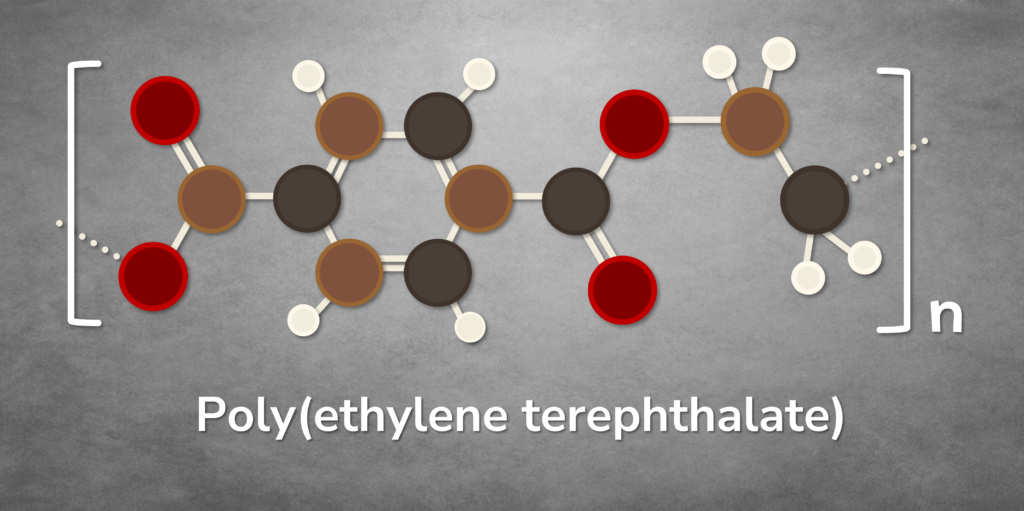
Poly(ethylene terephthalate) was discovered after World War II. Its high melting point of 256 °C results from a low entropy of fusion — that is, from a high chain rigidity. Polycapramide, with its useful fiber properties, had been patented a few years earlier.
When Flory joined Carothers’s laboratory, he derived an expression for the distribution of chain lengths in polycondensation, establishing that a functional group’s reactivity is independent of the size of the molecule; this was verified by kinetic studies, which also showed that the rate constant is independent of the medium’s viscosity. Carothers and Flory studied gelation, defining the gel point as the moment when an infinite network first appears.
The discovery of polysiloxanes grew out of Kipping’s study of organosilicon compounds, with his observation that Si–OH groups condense spontaneously to Si–O–Si. At the same time, researchers at the Corning Glass works were trying to prepare polysiloxanes as thermosetting resins for impregnating woven fiberglass tapes. This work was completed at the General Electric Co. with the synthesis of polydimethylsiloxane. It reached the market once a low-cost synthesis of dimethylsilicon dichloride was discovered, from methyl chloride and a silicon–copper alloy.
Early work on polyurethanes by Bayer during World War II indicated that crosslinking was essential for elasticity. A DuPont patent, however, showed that coupling soft, non-crystallizable prepolymers with hard, crystallizable ones produces highly elastic polymers even in the absence of crosslinks.
The preparation of a polymer by interfacial polycondensation — between two bifunctional reactants, one dissolved in water and the other in a water-immiscible organic solvent — was first suggested in Germany for polyurethanes, and later patented in the United States. The patent noted the broad scope of the method. This technique has since been applied to the synthesis of a terephthalamide that melts at 455 °C.
World War II
During World War II, both the Allied and the Axis powers faced cuts in their supplies of raw materials, and the plastics industry proved to be an endless source of acceptable substitutes. Germany, for example, having lost its natural latex sources, launched a major program that led to the development of a usable synthetic rubber. Japan’s entry into the global conflict cut off American supplies of natural rubber, silk, and many Asian metals; the U.S. response was to intensify the development and production of plastics. Nylon became a major source of textile fibers, polyesters were used in making armor and other war materials, and several types of synthetic rubber were produced in large quantities.
The Postwar Boom
Through the postwar years, the plastics industry kept up its rapid pace of discovery and development. Advances in engineering plastics — polycarbonates, acetates, and polyamides — were of particular interest. Other synthetic materials replaced metals in machine components, safety helmets, equipment exposed to high temperatures, and many other products used in extreme environments. In 1953, the German chemist Karl Ziegler developed polyethylene, and in 1954 the Italian Giulio Natta developed polypropylene — today the two most widely used plastics in the world. In 1963, the two scientists shared the Nobel Prize in Chemistry for their work on polymers.